Who Handles Common Areas After HOA Dissolution?
Published on: January 3, 2026 | Last Updated: January 3, 2026
Written By: Brandon Chatham
When an HOA dissolves, the legal responsibility for common areas and maintenance transfers directly to the individual homeowners as co-owners of the property. This shared ownership means every homeowner in the community automatically becomes liable for the upkeep, repairs, and potential liabilities associated with these shared spaces.
You might wonder how this shared responsibility is enforced if there’s no longer a formal association. Without an HOA, enforcement typically falls to local government authorities or through civil action between neighbors. Local code enforcement can issue violations for neglected maintenance, and individual homeowners can file lawsuits against other owners who refuse to contribute to necessary repairs or upkeep.
Navigating the aftermath of an HOA dissolution requires careful planning and clear agreements between neighbors. This guide walks you through the critical steps for managing common areas, from establishing maintenance agreements to handling legal liabilities. You’ll learn practical solutions for organizing upkeep, dividing costs fairly, and protecting your property investment when the formal HOA structure disappears.
The Process of HOA Dissolution
HOA dissolution is the formal legal termination of your homeowners association, transforming it from a governing entity into a memory. This process, often called “winding up,” involves settling all HOA affairs before it ceases to exist. This is a step-by-step HOA dissolution process that moves from initial vote to final dissolution. Following each step helps ensure a smooth, compliant wind-down of the HOA. Your board of directors holds a fiduciary duty to act in the community’s best interests throughout this entire procedure.
- The board initiates the process by proposing dissolution and creating a formal plan for homeowner review.
- Homeowners then vote on the dissolution, typically requiring a high percentage of member approval as outlined in your governing documents and state law.
- Once approved, the association files formal articles of dissolution with the appropriate state agency to make it legally official.
Your board’s responsibilities include paying off all remaining HOA debts, collecting outstanding dues, and managing the final distribution of any assets. The “winding up” phase is critical for ensuring a clean break and preventing future legal problems for individual homeowners. Board members must act with care and transparency, as they remain legally accountable for their actions during dissolution. In this capacity, they have fiduciary duties to homeowners to act in good faith and avoid conflicts of interest. They must follow the governing documents, comply with state law, and provide timely information about decisions and distributions.
Ownership of Common Areas Post-Dissolution
When the HOA dissolves, the big question becomes who owns the swimming pool, parks, and clubhouse. The fate of these common areas is usually determined by the original declaration of covenants, conditions, and restrictions (CC&Rs). This foundational document often contains specific clauses for this exact scenario, outlining how property should be transferred.
Existing deed restrictions and easements can also heavily influence the outcome, sometimes making it difficult to simply divide the land. You must review your community’s specific governing documents to understand which path your property will take. The ownership of these shared spaces typically transfers in one of these ways:
- Individual homeowners may receive undivided fractional interests in the common land.
- The local government or a parks district might assume ownership if the area serves a public function.
- A new entity, like a neighborhood maintenance association, could be formed to take control.
- In some cases, the land is sold and the proceeds are distributed among the homeowners.
Maintenance Duties and Responsibilities
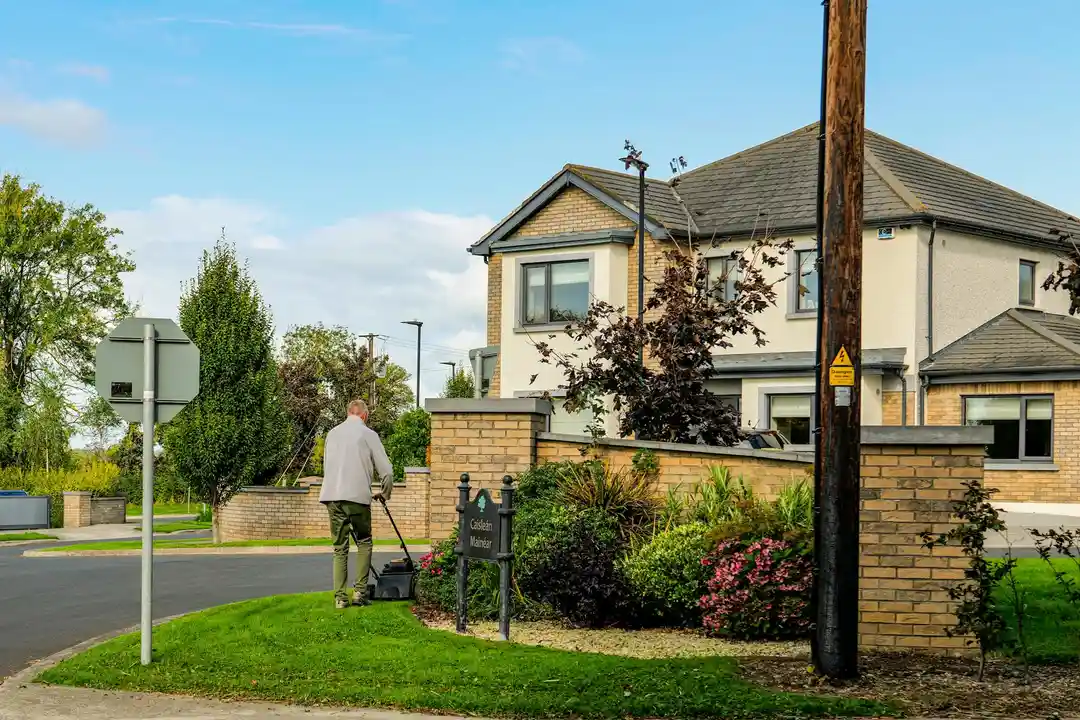
Without an HOA, the legal responsibility for maintenance falls directly on the property owners. Each homeowner becomes personally responsible for their share of upkeep on formerly common property. This shift creates a new dynamic where cooperation and clear agreements are essential to prevent neglect and preserve property values. It’s also important to understand what maintenance tasks are always the homeowner’s responsibility, regardless of an HOA.
Common maintenance responsibilities now require collective action, including landscaping, pool care, streetlight repairs, and drainage system upkeep. Liability for injuries on common property may shift to the individual homeowners who now own it. Even so, the HOA can still be held liable for injuries that occur in common areas due to maintenance lapses, which is often referred to as HOA liability in common areas. This underscores the importance of assessing HOA liability and ensuring adequate coverage beyond personal policies. You must also address insurance coverage, as your individual policies likely won’t extend to these newly acquired shared areas, leaving a significant protection gap.
Immediate Maintenance Needs
Addressing urgent tasks is the first priority after dissolution to prevent safety hazards and property damage. Create an immediate action plan for time-sensitive items like pool chemical balancing, lawn mowing, and parking lot lighting. Homeowners must self-organize quickly to handle these critical services without interruption.
Follow these steps to coordinate essential maintenance in the short term. Establish a simple communication channel, like a group email or text chain, for all affected homeowners. Then vote on hiring temporary services for crucial maintenance tasks and collect funds through a one-time assessment. Finally, designate volunteers to oversee these services until a more permanent solution is established. This can be a useful first step to managing maintenance while the HOA finalizes its arrangements.
Long-Term Maintenance Planning
Sustaining your community’s appearance and functionality requires strategic thinking beyond the initial transition. Developing a long-term maintenance schedule prevents minor issues from becoming major expenses down the road. Consider creating a shared digital calendar that tracks seasonal tasks like gutter cleaning, irrigation winterization, and playground equipment inspections.
Many successful neighborhoods form volunteer committees focused on specific areas like landscaping, pools, or structural repairs. Establishing a simple written agreement among homeowners helps clarify expectations and financial commitments for ongoing upkeep. Some communities opt for a lightweight maintenance agreement, which is less formal than an HOA but provides structure for shared responsibilities and cost sharing.
Governing Documents and Legal Obligations
Your HOA’s governing documents don’t simply vanish when the association dissolves. These legally recorded covenants, conditions, and restrictions (CC&Rs) and bylaws often contain clauses that outline specific duties and obligations that survive the dissolution itself. You must review these documents meticulously, as they can dictate how common areas are handled long after the HOA is gone.
Key clauses to look for in your governing documents include:
- Assessment Collection: Some documents specify that the obligation to pay for common area upkeep becomes a direct responsibility of each homeowner, even without an active HOA board to collect fees.
- Lien Enforcement: The authority to place a lien on a property for non-payment of these obligations might be explicitly granted within the CC&Rs, providing a legal tool for ensuring compliance.
- Easements and Rights: Documents commonly grant easements for maintenance access across individual lots to reach common areas, a right that remains crucial for any future maintenance crew or committee.
State laws provide the final word on this complex process. Your state’s nonprofit corporation act and planned community statutes will outline the mandatory steps for winding down an association, which can include settling all debts and distributing remaining assets. These laws can override contradictory language in your HOA’s documents or fill in gaps where your documents are silent. Consulting with an attorney familiar with your state’s specific laws is not just a good idea-it’s essential for navigating this legal minefield correctly.
Funding Common Area Maintenance
Without monthly dues flowing into a central account, paying for lawn care, pool service, or roof repairs becomes a major challenge. You and your neighbors must proactively establish a new system for funding essential maintenance to prevent property decay and preserve home values. Letting this slide can lead to costly special assessments down the road or even legal disputes between homeowners.
Your primary funding options after dissolution typically involve:
- Reserve Funds: Any money left in the HOA’s accounts after paying off debts is the first source for final maintenance projects.
- Homeowner Contributions: Homeowners can agree to make regular, voluntary payments into a new fund managed by a trustee or a small committee.
- Grants or Municipal Aid: In some cases, local government programs offer grants for maintaining shared green spaces or historic community elements.
Enforcing payment agreements requires a clear, written plan signed by all participating homeowners. Creating a simple contract that outlines each owner’s financial responsibility and the consequences for default is the most effective way to ensure everyone pays their fair share. For handling defaults, the group may agree to charge late fees or, if the original CC&Rs allow it, pursue a lien against the non-paying owner’s property. This is a serious step that requires legal guidance.
Managing Reserve Funds
The remaining HOA reserve funds are a valuable asset that must be handled with transparency and fairness. Accessing these funds usually requires a final vote by the membership or action by the last acting board members to formally close the association’s bank accounts. These reserves are subject to legal requirements set by state law and the HOA’s governing documents. Regular reserve studies and transparent reporting help ensure funds are used for their intended purpose. The money cannot simply be distributed to homeowners like profits; it must be used for its intended purpose—the common areas.
Follow these steps to audit and allocate the money fairly:
- Hire a neutral third party, like an accountant, to conduct a final audit of all HOA financial records.
- Identify and pay off any outstanding HOA debts or bills from the reserve funds.
- Based on the audit, hold a community meeting to vote on how to allocate the remaining funds, such as for one last major repair or placing it in a new trust for future needs.
- Document every decision and financial transaction meticulously to protect all homeowners from future liability.
Alternative Funding Strategies
When reserve funds are depleted or non-existent, your community needs to get creative. Exploring alternative funding strategies can provide a sustainable path forward for maintaining the shared spaces that define your neighborhood’s character. Each option comes with its own set of advantages and challenges that require careful consideration.
Here are some creative solutions and their pros and cons:
- Voluntary Special Assessments:
- Pros: Flexible for one-time projects, doesn’t create a long-term financial commitment.
- Cons: Relies on voluntary participation, can be difficult to collect full amounts, may not cover ongoing costs.
- Forming a Maintenance Agreement or New Entity:
- Pros: Creates a legally binding structure, allows for enforceable collection of fees, provides long-term stability.
- Cons: Requires significant legal setup, needs near-unanimous homeowner buy-in, involves ongoing administrative work.
- Partnerships with Local Government or Businesses:
- Pros: Can bring in external funding or resources, reduces direct financial burden on homeowners.
- Cons: May come with usage restrictions or loss of control over the common area, often a competitive and lengthy application process.
Forming a Successor Entity
After your HOA dissolves, you can create a new group to handle common areas. One popular choice is forming a fresh homeowners association with updated rules and structure. You might also opt for a neighborhood committee or hire a professional management company to take over duties. Understanding what an HOA is and how it works can help you decide which approach is best for your community.
Another route is establishing a nonprofit corporation focused solely on maintenance. This entity can collect fees and manage repairs without the full scope of an HOA. From my experience, smaller communities often prefer this streamlined approach to avoid complex governance.
- Draft new governing documents that define roles, fees, and maintenance schedules.
- Secure agreement from a majority of homeowners through votes or signed consents.
- Register the new entity with state agencies to ensure legal recognition.
Property management contracts are key for outsourcing tasks like landscaping or pool upkeep. These agreements specify services, costs, and performance standards to keep everything running smoothly. When forming a board, elect volunteers who understand local needs and can commit time.
Role of State and Local Government

If no successor group forms, local government might step in to address safety hazards. They often intervene when neglected common areas violate health or building codes. For instance, overgrown lawns or broken fences could trigger municipal action to protect the community.
Common government actions include code enforcement fines, creating special assessment districts, or placing the property under receivership. Receivership allows a court-appointed manager to take control until issues are resolved. Special districts might levy taxes to fund essential services like trash collection.
- Code enforcement: Officials inspect properties and issue citations for violations.
- Special districts: Local governments form these to manage utilities or repairs.
- Receivership: A legal process where a third party manages the property temporarily.
Engage with municipal authorities early if you notice recurring problems. Contact your city’s planning department or code enforcement office to report concerns and seek solutions. Provide documentation like photos or meeting notes to show the need for support.
FAQs
What happens if a homeowner refuses to pay for maintenance after the HOA is gone?
Without an HOA, you must rely on voluntary agreements or existing CC&Rs for enforcement. If a homeowner defaults, the group may need to pursue legal action or, if the original documents allow it, place a lien on the property. Unlike an HOA lien, this process may be more complicated and less straightforward.
How do we pay for ongoing maintenance without monthly HOA dues?
Homeowners must collectively agree on a new system for funding, such as voluntary contributions or special assessments. Creating a simple, written contract signed by all participants is the most effective way to ensure everyone pays their fair share.
Can we form a new, simpler organization to manage the common areas?
Yes, a popular solution is to form a new, less formal entity like a maintenance association or a nonprofit corporation. This successor entity can collect fees and manage repairs without the full regulatory burden of a traditional HOA.
When will the local government get involved in common area issues?
Local authorities typically intervene when neglected common areas become safety hazards or violate city health and building codes. They often step in to address issues like overgrown vegetation or structural dangers that affect public welfare.
Navigating Post-Dissolution Responsibilities
Your first step after an HOA dissolves is to carefully review your property’s original governing documents and any formal dissolution agreement. From there, you and your neighbors must proactively form a new maintenance plan, as the legal and financial responsibility for common areas falls directly to the individual property owners. This is especially important because, like any assets or property owned by the dissolved HOA typically transfer differently than individual properties.
Further Reading & Sources
- Dissolving a Homeowners’ or Community Association (HOA)
- How to Get Rid of An HOA When You And Everyone Else Wants A Change
- Can homeowners get rid of their HOA?
- Understanding The Process of Dissolving a Homeowners’ Association – Homeowners Protection Bureau, LLC
Brandon has been on both ends of HOA, as part of it, he has helped build his community in Oregon, while also helping other homeowners deal with typical and atypical issues one might face. He has 8+ years of experience dealing with HOAs himself and on behalf of his friends and family, and he brings his extensive expertise and knowledge to make your HOA interaction seamless and smooth.
Maintenance Responsibilities